Buy Nothing (For $47.99)
There is now a product for every variety of rejection of branding. A carefully designed aesthetic for people who reject carefully designed aesthetics.
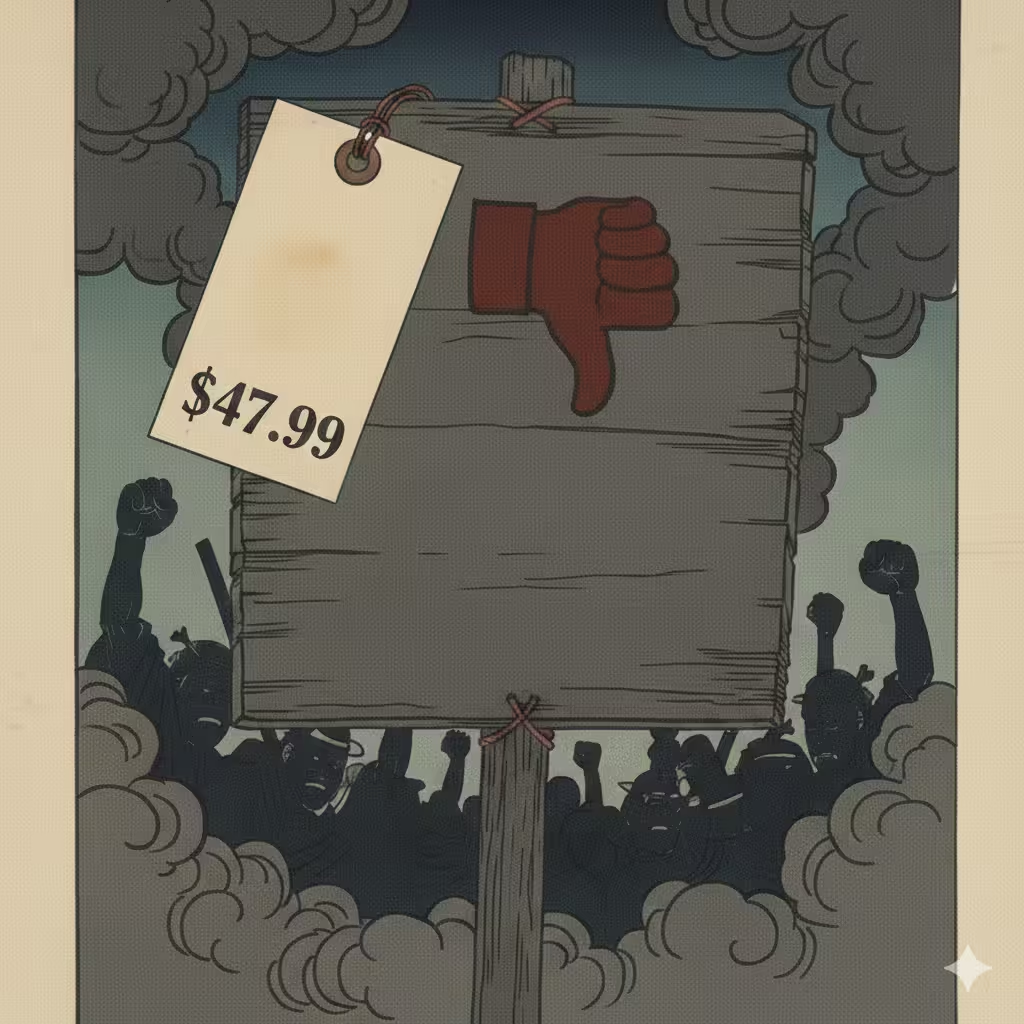
In 1997, the magazine Adbusters launched "Buy Nothing Day"—a 24-hour protest against consumer culture scheduled for the Friday after Thanksgiving. For one day, don't buy anything. Reject the manipulation of advertising. Step outside the system.
By 2015, you could purchase Buy Nothing Day merchandise from the Adbusters online store.
A revenue stream. Out of a movement against buying things. Big buck from selling things that symbolized not buying things.
Not-buyer buyer
There's a creature in the modern economy called the rebel consumer. They express their rejection of consumer culture through consumption. They signal their immunity to marketing by purchasing products marketed to the immunity-minded.
The brands that serve this market are real judo masters. They use your own momentum against you.
Patagonia's "Don't Buy This Jacket" ad campaign ran in 2011. It asked consumers to think twice before making purchases. Sales increased by almost 30% the following year. It was one of the most successful campaigns of the 10s.
Because when a brand tells you not to buy something, they aren't just selling a jacket anymore. They're selling "Integrity." And Integrity? Well, that's much harder to find at the mall than a fleece pullover.
Resistance to influence is a market segment. On Facebook and Google's ad platforms, "Minimalism" and "Anti-Consumerism" are checkboxes you can click to target a demographic. Your soul's deepest desire to be free of the system is a data point used to show you an ad for a sustainably-sourced hemp candle.
Not-influenced influencee
To some, the hemp candle smells like freedom. But as the wax melts, let's look at what's actually burning. Time. The time you spend thinking about how much you don't want to spend time on things.
Cal Newport's book Digital Minimalism has sold hundreds of thousands of copies. It's a manual on how to reclaim your brain from the "attention economy." Now, you might say: "People buy the book online using an algorithm so they can learn how to NOT be manipulated by algorithms. It's a one-time transaction for a lifetime of freedom!"
And you're right. Or are you?
When you buy a book about escaping the attention economy, the algorithm doesn't say, "Oh, they're leaving. Better stop". No. The algorithm says: "Target Acquired: This user is interested in 'Digital Minimalism.' Show them more. Show them 'The Minimalist's Guide to Coffee.' Show them 'Minimalist Desk Setups'". By buying the "escape plan," you've accidentally handed the system a map of your new hiding spot.
We've become "Information Preppers". We build fortress, cognitive cages: website blockers, app timers, grayscale phone screens which makes the world look like a 1940s noir film, but with more Uber Eats notifications.
Is a cage still a cage if you're the one who locked the door?
If you buy an iPhone and install a 99$/year app-blocker – are you escaping the attention economy? Or are you just paying a premium for a "luxury" version of silence?
Total, absolute silence is measured at negative 20.6 decibels. It's so quiet you can hear your own scalp moving. Terrifying. We don't want that silence; we want a controlled, measured, designed silence.
Designed by who?
Which "thoughtful" YouTube essayist, which "unfiltered" podcast host, or which "minimalist" guru convinced you that this specific configuration of filters was the "correct" way to be free?
Like a "low-fat" snack that replaces fat with sugar, the "anti-consumer" market replaces one type of consumption with another. It's a "Quiet Tax". A fee you pay to the system for the privilege of the system leaving you alone.
But as long as you are paying the fee... are you ever actually alone?
Topics